ObesiMap
Which brain cells listen to leptin? A single-cell map of the brain's hunger and fullness center.
Python · Scanpy · DESeq2 · GSEA · LIANA · Streamlit
The idea
Obesity is a metabolic disorder, but it's also a breakdown in brain signaling. In leptin resistance, the arcuate hypothalamus and median eminence (Arc-ME), the brain's hunger and fullness control center, stops responding to leptin, the hormone that signals fullness.
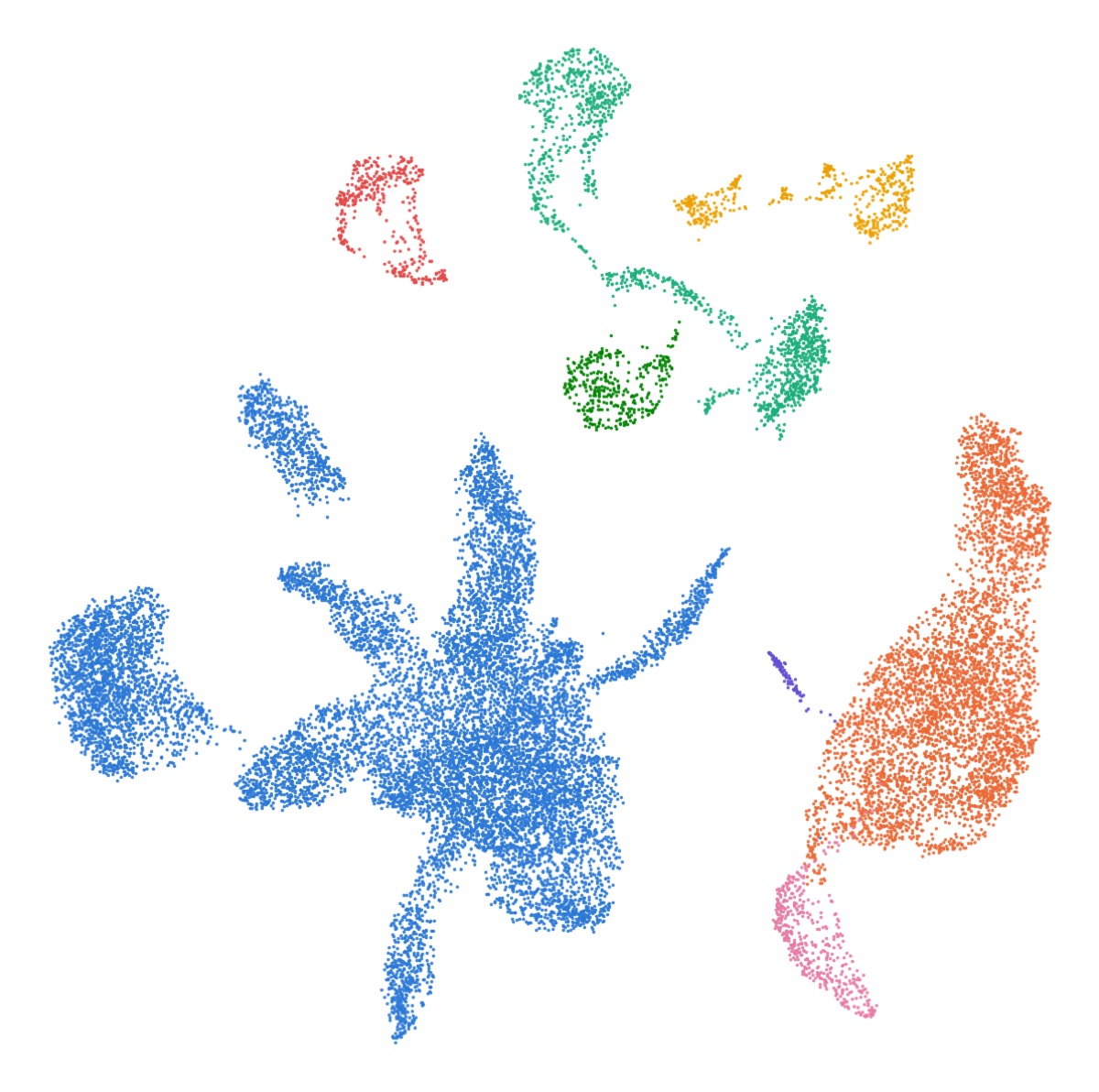
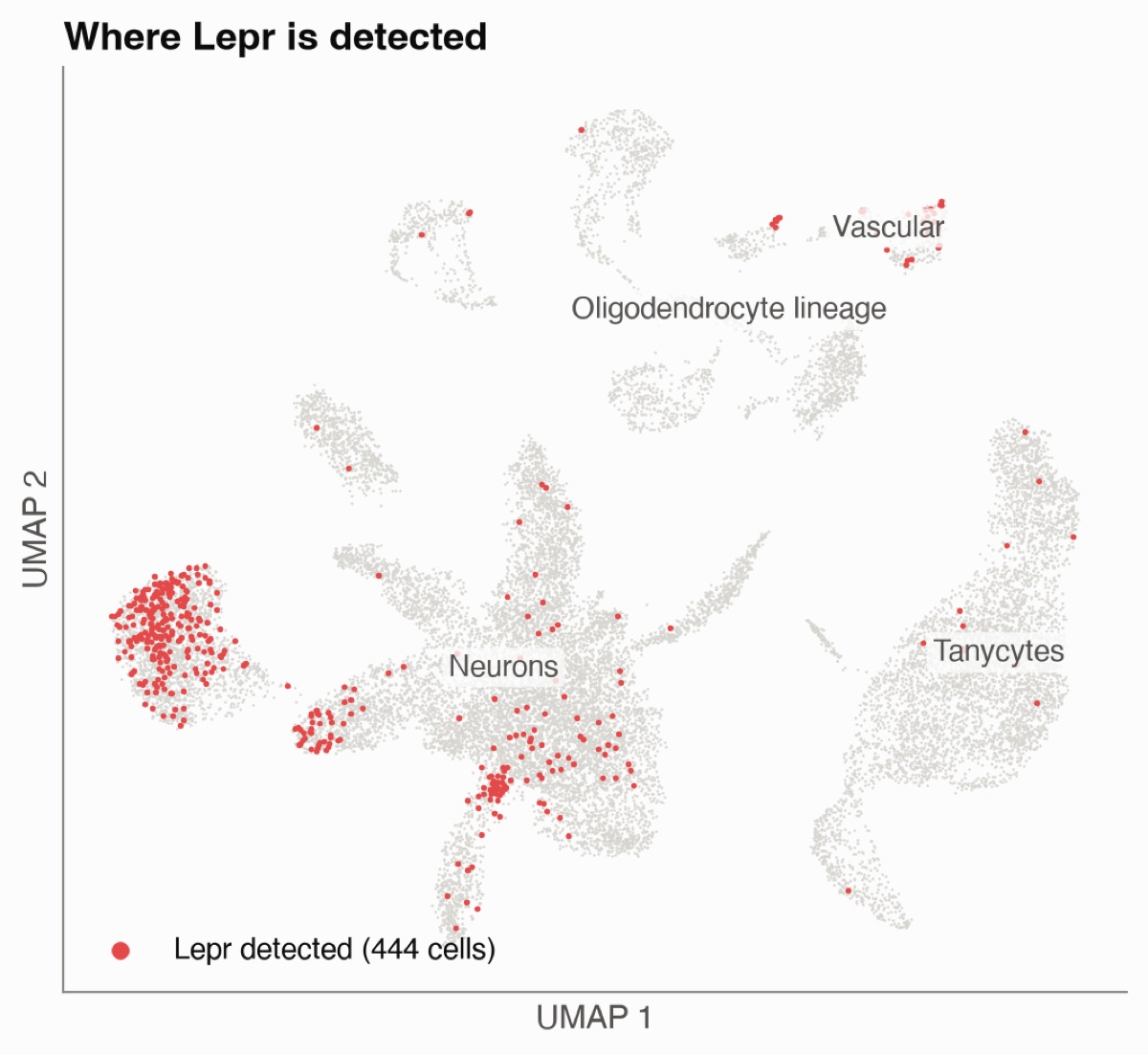
ObesiMap analyzes single-cell RNA sequencing of 20,921 mouse Arc-ME cells to ask which cells carry the leptin receptor (Lepr), how they respond to fasting and a high-fat diet, and which cells talk to them.
Highlights
- Rebuilt the cell atlas from raw counts; the clusters match the original authors' cell classes almost exactly (adjusted Rand index 0.99).
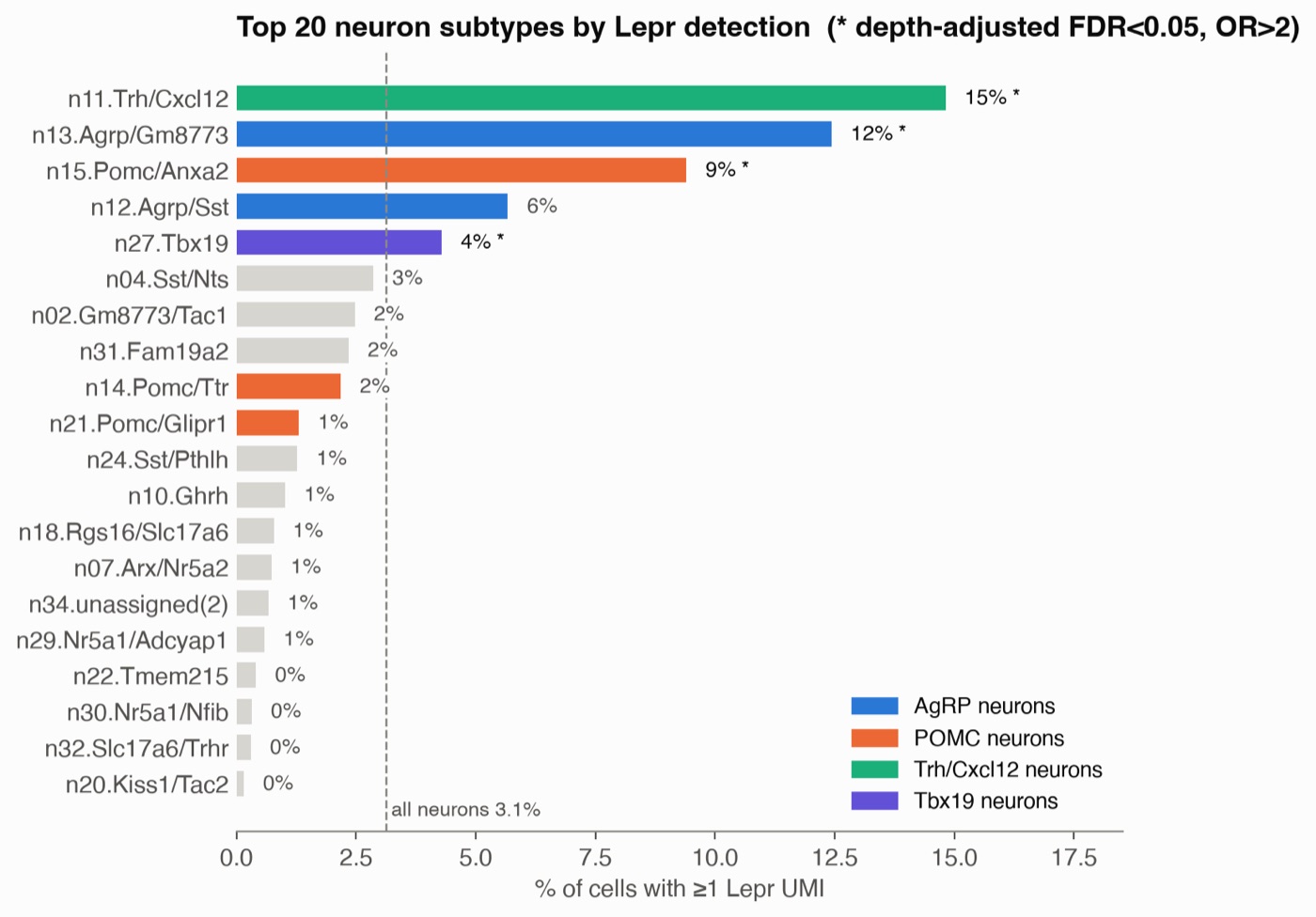
- Lepr+ cells are mostly neurons (90%) and blood-vessel cells (6.5%), with almost no glia. Among Lepr+ neurons, 62% are AgRP, 12% POMC, and 12% the newer Trh/Cxcl12 type.
- Characterized the Trh/Cxcl12 neurons, which have the highest Lepr rate of any population and sit closer to AgRP than to POMC neurons.
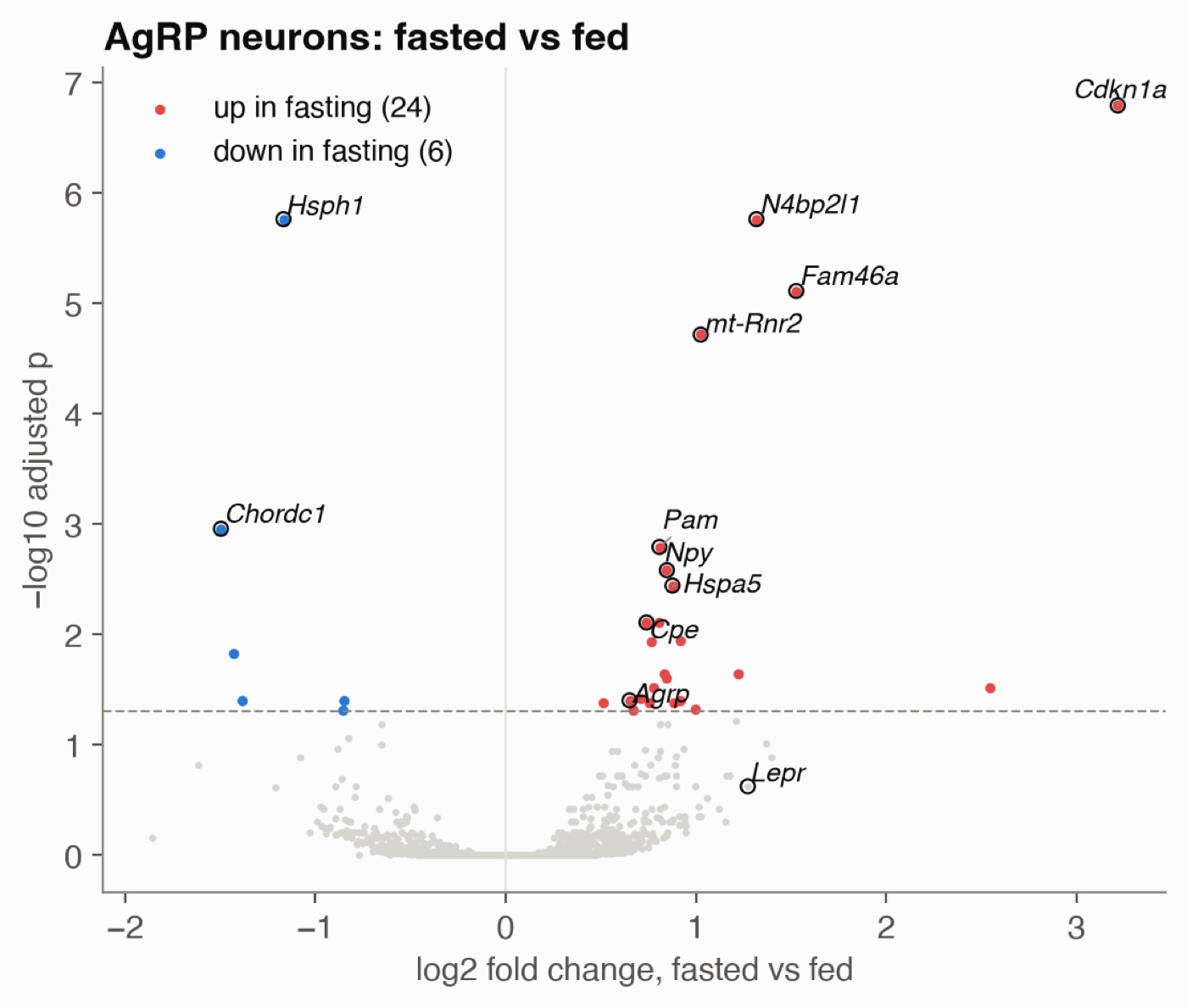
- With fasting, AgRP neurons change most: Npy and Agrp rise in all four matched pairs, alongside ER-stress chaperones.
- Cell-to-cell signaling: fasting cuts active interactions from 10,391 to 9,112, and melanocortin input to AgRP neurons disappears.
Figures
How it works
- Raw counts
- QC and clusters
- Lepr+ cells
- Fasting and diet
- Pathways
- Cell signaling
- The published “batch-corrected” matrix has no zeros, so it can't say whether a cell expresses Lepr at all. Everything is rebuilt from raw UMI counts, after reconciling three files with three naming schemes and repairing the cluster legend.
- Each condition was sequenced on its own day, so comparisons stay within a day: fasting uses four matched fed/fasted pairs with pseudobulk DESeq2.
- Data: Campbell et al., 2017 (GEO GSE93374). Delivered as scripts, 31 figures, the processed dataset, and an 18-slide deck.